How to brew up Kung Fu Tea ( video )

Friday, December 5, 2008

Yerba maté tea

Yerba mate, Ilex paraguariensis, is a species of holly native to subtropical South America in Argentina, eastern Paraguay, western Uruguay and southern Brazil. It was first scientifically classified by Swiss botanist Moses Bertoni, who settled in Paraguay in 1894.
The yerba mate plant is a shrub or small tree growing up to 15 meters tall. The leaves are evergreen, 7–11 cm long and 3–5.5 cm wide, with a serrated margin. The flowers are small, greenish-white, with four petals. The fruit is a red drupe 4–6 mm diameter.

From : www.wikipedia.org

Thursday, December 4, 2008

The smallest teapot

Wednesday, December 3, 2008

Photo of China Tea Museum

Tuesday, December 2, 2008

The China Tea Museum

The China Tea Museum located in Shuangfeng,Longjing Road,Hangzhou,Zhijiang province. It occupies 3.7 hectares and 8,000 square meters construction area.it is a national-rank museum. The special subjects of it are about tea and its culture. It was opened to public in April, 1991. The museum is clustered around the tea plantations. The function buildings are que disorder. In side the museum, the flower corridors, fake hills, ponds and water-side pavilions are well integrated. So they make it as the park in the south of the Changjiang River where has the clean atmosphere and can feel the closeness to nature. China National Tea Museum, with the tea taste and fragrance, makes friends all over world.

Monday, December 1, 2008

South Africa Rooibos tea

Rooibos (Red Bush) is a natural herb unique to South Africa. It is grown high in an area 200km north of Cape Town in the Cedarberg Mountains. Its plant (Aspalathus Linearis) has fine and needle-like leaves discovered in 1772. With specific climatic conditions, pure mineral water, fresh mountain air and non-polluted soil, the Region of the Cedarberg Mountains is the ONLY place producing Rooibos Tea in the world.

Friday, November 28, 2008

Fried shrimp with Longjing

Materials :

Shrimp(without shell) - 300g
Longjing tea leaf - 10g
Egg white - 1 egg
Seasoning - 1 teaspoon of salt, 1 spoon of soybean meal, 1 teaspoon of Chinese liquor

Cooking :

1. Wash shrimp with salt, to the surface was sticky, and then wash with water.
2. Shrimp dry of water, adding salt to stir, adding egg white and soybean meal to stir.
3. Frozen shrimp to 30 minutes.
4. Bubble tea to 3 minutes, pour out the water, tea leaf remain for use.
5. Fire to heat half pot oil, put the frozen shrimp into and then pick up.
6. Fire, plus 1 teaspoon oil, shrimp, tea leaf and wine to stir-fry.
7. Finish!

Thursday, November 27, 2008

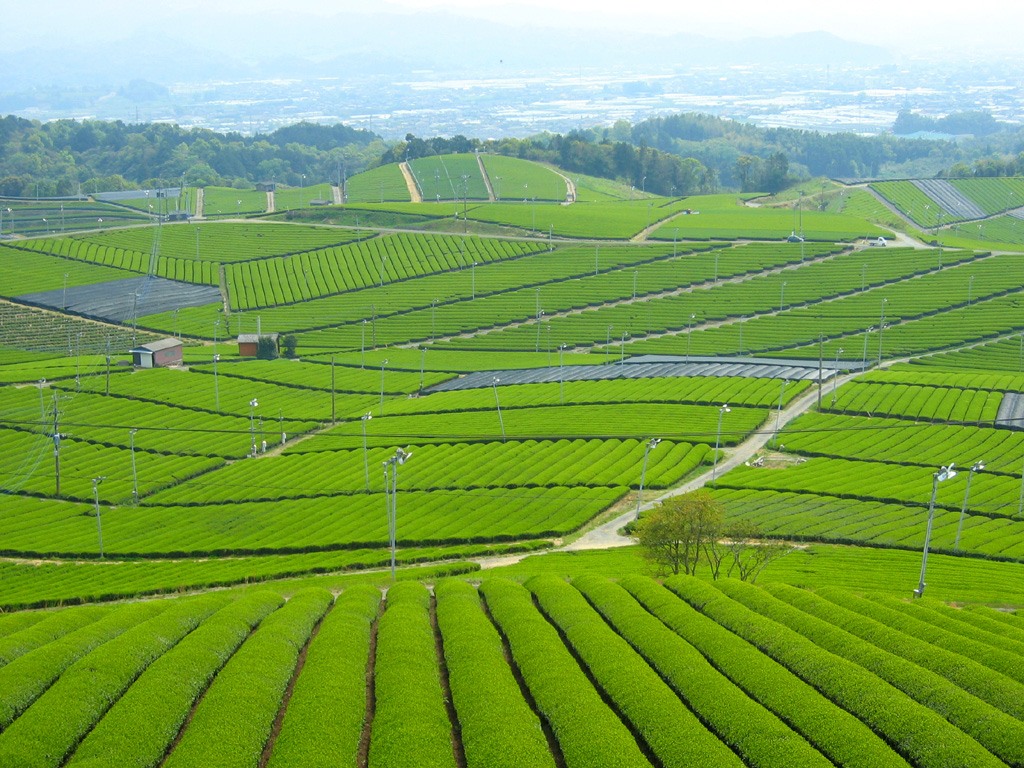
Some pictures of tea plantation

Wednesday, November 26, 2008

Some traditional Chinese painting

Tuesday, November 25, 2008

Japanese tea ceremony


The Japanese tea ceremony (茶道, chadō or sadō, "the way of tea") is a traditional ritual influenced by Zen Buddhism in which powdered green tea, or matcha (抹茶), is ceremonially prepared by a skilled practitioner and served to a small group of guests in a tranquil setting. Colloquially it is often called ocha among Japanese.

The pronunciation sadō is preferred by some traditions, including the Omotesenke and the Mushanokōjisenke, while the pronunciation chadō is preferred by others, including the Urasenke tradition, though the two words are completely interchangeable.

Cha-no-yu (literally "hot water for tea") usually refers to either a single ceremony or ritual or equivalent with sadō/chadō, while cha-ji refers to a full tea ceremony with kaiseki (a light meal), usucha (thin tea) and koicha (thick tea), lasting approximately four hours. A chakai (literally "tea meeting") was originally equal to cha-ji, although today it means the simplest one, which does not include a kaiseki meal, in some cases, nor even koicha.

Since a tea practitioner must be familiar with the production and types of tea, with kimono, calligraphy, flower arranging, ceramics, incense and a wide range of other disciplines and traditional arts in addition to his or her school's tea practices, the study of the tea ceremony takes many years and often lasts a lifetime. Even to participate as a guest in a formal tea ceremony requires knowledge of the prescribed gestures and phrases expected of guests, the proper way to take tea and sweets, and general deportment in the tea room.

http://en.wikipedia.org/wiki/Japanese_tea_ceremony

Monday, November 24, 2008

Tai Ping monkey-kui

Tai Ping monkey-kui, produced in Huangshan City, Anhui Huangshan District (formerly Pacific County) out of the new township of pit monkey, the monkey Kong and Yan village three villages. Maria-quality tea as a result of the monkey, named. Huangshan is located in the monkey pit, towering forest, indemnity cloud temperature and humid air, relative humidity of over 80%. Tea garden soil fertile, humus-rich, suitable pH value, PH value of 4.5 to 6.5. Persimmon produce large fine varieties of tea, tender shoots, leaves fat, more cents, to form a monkey Fukui unique shape and excellent quality of the main factors.

The good Tai Ping monkey-kui : Tea straighten their products, at both ends a little sharp, neat and well-spaced flat, sturdy hypertrophy, Pekoe body, but not significantly lush, hidden, Cang green color, leaves colored pig liver were the main vein, Like olives; into the brewing Cup, started slowly shoots, flowers Shu Fang Cheng, the two have a leaf bud, or suspended or Shen; green tea-ching, GAO aroma, there are attractive Orchid Yun, Wei Chun refreshing.


Tuesday, October 21, 2008

Bloom Tea

First Sight Love

Basker of Lily

EasternBeauty

Lady's Lily

Buddha Tea

Thursday, September 18, 2008

Photo of Chinese teapot_03

六方宝壶

通梅子冶

Photo of Chinese teapot_11